
Client follow-up tracker
A useful follow-up list tells you more than “contact client”.
Write the thing you need, whose turn it is, and the next sensible checkpoint. Keep enough history to return without starting the conversation again.
7-day trial for genuinely new accounts, or a 30-day trial with a valid active Referral ID. View access and pricing.
Use a title that survives a few days away
“Follow up” is an instruction without context. “Confirm the next conversation about the proposal” tells you what remains unresolved. The Person tells you whom it concerns.
Keep your own promise on Your turn and a requested reply on Waiting on them. A date is optional; add one when it represents a useful agreed or chosen checkpoint.
Choose the smallest system that fits
A notebook works well when you have a few items and review it reliably. A spreadsheet gives you a flexible list. Email flags keep attention near a thread. A task manager can use waiting-for labels. None of those choices is inherently wrong.
SaathKaam is useful when the person, responsibility, next step and history need to stay together. A CRM is a better category to investigate when you need deal stages, a sales pipeline or wider contact-management workflows.
Review the result before choosing the next contact
Sending a message does not prove the client read it or agreed. Record action for what you did; record outcome for the reply, clarification or new commitment you actually received.
When you return later, use the Timeline to recover useful context. Do not keep an item open indefinitely just because it once mattered: define what Done would mean for that specific request.
Follow-up context, not sales automation
You can track a question about a proposal made in another tool. SaathKaam does not generate proposals or turn that question into an automated sales sequence.
You can track a payment-related promise without creating an invoice or collecting money. Keep communication, documents and transactions in their appropriate existing systems.
Try the model
Confirm the next conversation about the proposal
You sent Asha a proposal outside SaathKaam. She said she would discuss it internally before deciding whether another conversation is useful.
Synthetic scenario. Names, work and checkpoints are fictional.
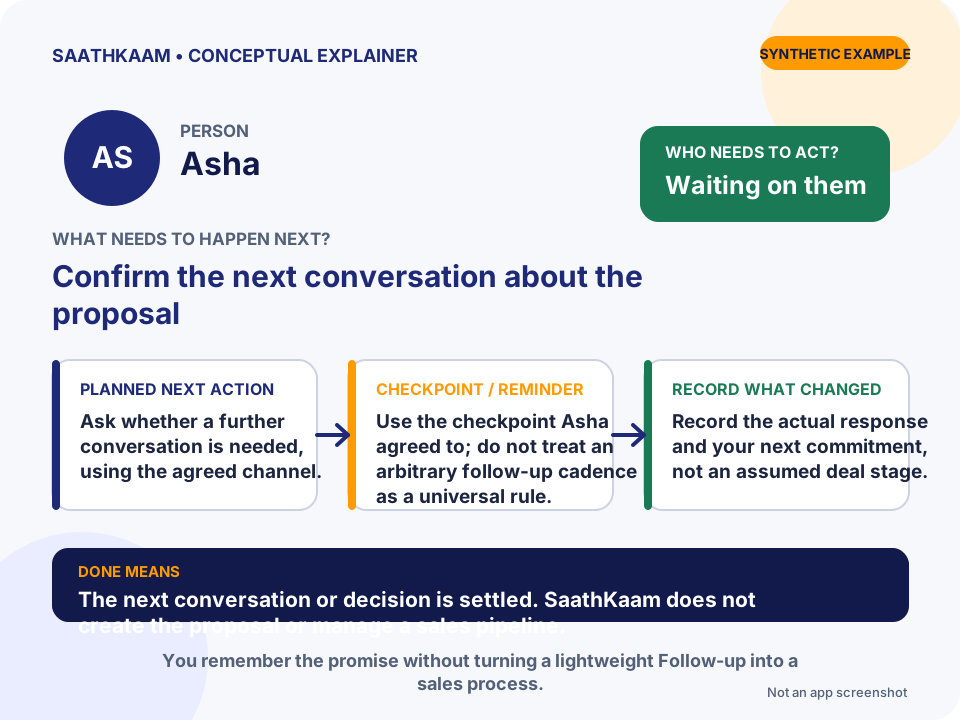
- Who
- Asha
- Follow-up
- Confirm the next conversation about the proposal
- Whose turn
- Waiting on them
- Planned next action
- Ask whether a further conversation is needed, using the agreed channel.
- Target date / Reminder
- Use the checkpoint Asha agreed to; do not treat an arbitrary follow-up cadence as a universal rule.
- What changes in the Timeline
- Record the actual response and your next commitment, not an assumed deal stage.
- What Done means
- The next conversation or decision is settled. SaathKaam does not create the proposal or manage a sales pipeline.
Choose one unfinished interaction.
Think of someone you are waiting for—or a promise you still need to keep. Add that Person and one clear Follow-up. Leave optional details until they are useful.
Try SaathKaam on Web